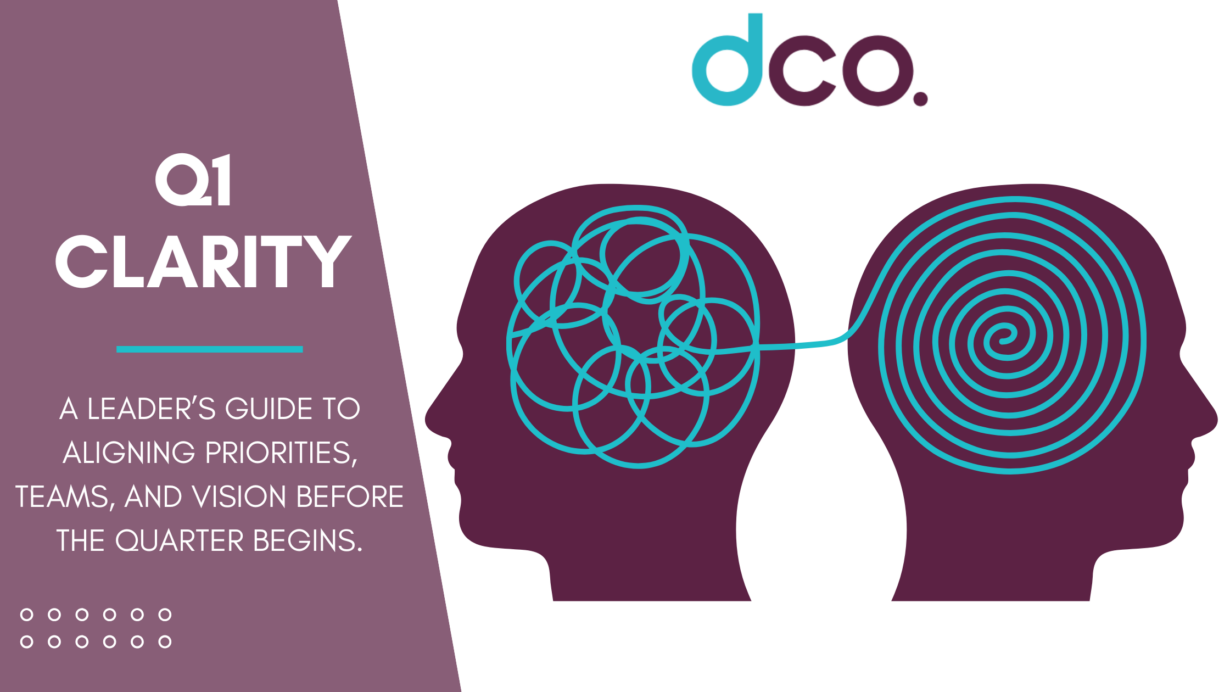
… What Every Leader Should Confirm Before Q1
January is a huge organisational catalyst.

The calendar flips, your teams come back from their breaks, and suddenly there is a collective pressure to move. This looks like new goals, new projects, new initiatives… all pushed forward at the same time.
Here is the uncomfortable truth:
Q1 doesn’t fall apart because people aren’t working hard enough from the get-go; it falls apart because the hard work wasn’t aligned before it began. This misalignment is usually only noticed too late, when it’s already costing time, trust or performance.
But the signs are there from the start! If you know where to look.
Here is the checklist worth running before you press “go” this January:

1. Direction: Is everyone genuinely clear?
Not just “we have goals”; actual clarity. Do people know:
- What matters most in Q1
- Why those things matter for the organisation
- What success will specifically look like for those priorities
Without a shared and simple understanding, your team will make well-intentioned assumptions that will send them in slightly respective directions. And in as crucial a time as January, a 5-degree misalignment on priorities can become a Q1 derailment.
Leaders often assume alignment exists just because priorities are published. It rarely does!

2. Priorities: Have you made them unmistakably obvious?
A common leadership blind spot that we notice from our work here at DCo: the assumption from leaders that people can “figure out” what matters most. They can’t…. not reliably.
Pick the few things that really matter for Q1 business, and then be explicit about:
- What is important about it
- What are the nice-to-haves around it
- What isn’t happening at all this quarter
You’ll be shocked at how much pressure this removes, and how much clarity it creates! A very common trap: leaders list priorities, but teams and individuals interpret them differently.

3. Capacity: Do you realistically have the capacity for the work you’re expecting?
Another common blind spot: underestimating the “hangover” effect of Q4 and the festive slow-down. Look honestly at:
- Who is actually available
- What unfinished Q4 work is still sitting in January’s inbox
- Where the bottlenecks are
- What ‘invisible work’ has accumulated (like reporting, admin, clean-up, onboarding, prepping)
Leaders often plan Q1 for the team they wish they had, not the one that’s carrying the real-world load. The capacity of your team is an essential truth to strategically design around, not a limitation. Many leaders plan Q1 as if the team magically resets after the holidays. Reality is different.

4. Capability: Can the team deliver what is expected?
Capability gaps hide, until they show up as “performance issues” later down the line. Ask yourself:
- Does everyone have the skills required for the year you’re trying to achieve?
- Has anyone silently stepped into a bigger role without the right support or recognition?
- Are new expectations matched with coaching, training and development?
Capability gaps don’t fix themselves! They widen; and they drag your high-potential Q1 results with them. High-performing individuals can carry extra load; but misaligned capability still shows overall results.

5. Communication: Clear, simple and predictable?
Most of January stress comes from communicative overload; vague updates, unclear expectations, a high pressure to perform for the year ahead, decision bottlenecks, too many meetings (or spending time in the wrong ones).
January is the time to get very clear on:
- Your meeting routine and rhythm
- How progress will be measured and displayed
- Where, when and by who decisions will be made
- Who needs visibility on what (and who doesn’t need it)
High performing teams don’t talk more, they talk better. Teams often over communicate in January to compensate for uncertainty, which ironically increases stress and cognitive load.
The simple test
Before you ask your team to accelerate this Q1, ask yourself:
If I stepped away for one month, would my team still know exactly what to do, how to do it, and why they are doing it?
If your answer is anything less than a clear and confident yes, alignment is the lever to pull. Because when the foundation is unclear, your urgency just accelerates the chaos.
Where we come in….
If you’re reading this advice and thought to yourself, “We’re doing some of this, but we’re definitely missing pieces.“, you’re not alone. Most teams step into the new year slightly out of sync; but often realise only after the pressure builds.
At DCo, we help businesses get on track – sharpening priorities, enabling precise communication, resetting expectations and standards, and building clarity around roles, goals and culture. We support you in placing strong foundations under your Q1 ambitions, so your year begins with focus instead of friction.
If you would like to like to explore what the could look like for your team, feel free to get in touch with DCo. We’re always open to discussing how we can help you hit the ground running.